Иногда, над фильмом в какой-то области (чаще всего со сценарием), работают несколько людей.
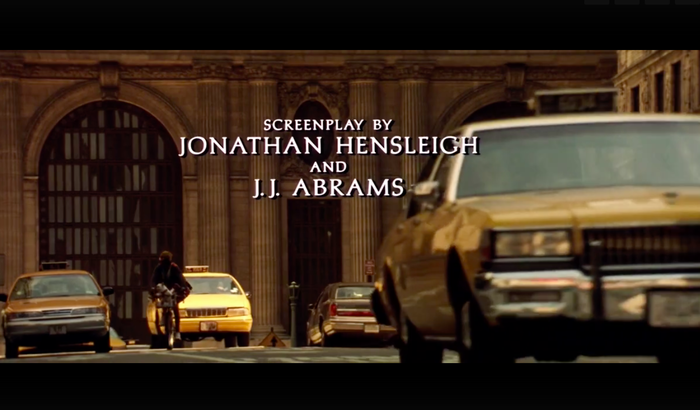
Так и указывают в титрах, например, в титрах «Армагеддона» значится «Screenplay by Jonathan Hensleigh and J. J. Abrams»:
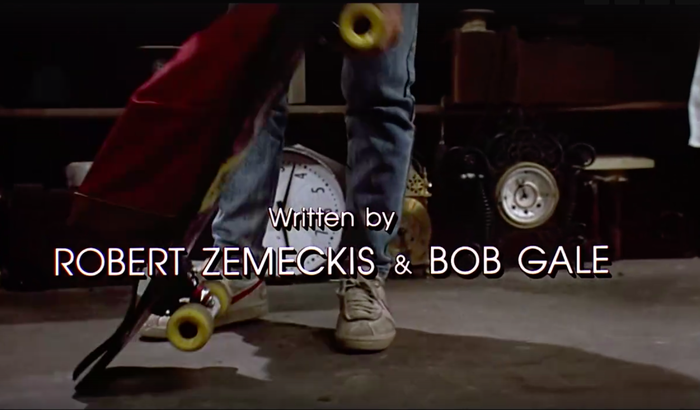
А в «Назад в будущее» указан дуэт «Robert Zemeckis & Bob Gale».
В чем же разница между «and» и «&»? Гильдия сценаристов США в своем FAQ разъясняет, что «and» используют, когда авторы писали сценарий раздельно, а амперсанд обозначает единую команду авторов, работавших вместе: https://www.wga.org/the-guild/about-us/faq#credits4
“The word ‘and’ designates that the writers wrote separately and an ampersand (‘&’) denotes a writing team.”
То есть амперсанд ставят только тогда, когда сценаристы трудились одновременно и разделили ответственность поровну. Союз «и» появляется, если один дорабатывал материал другого — в таком случае второй по списку обычно вносит более важный вклад.
Хороший пример — «Приключения Тинтина» Стивена Спилберга.
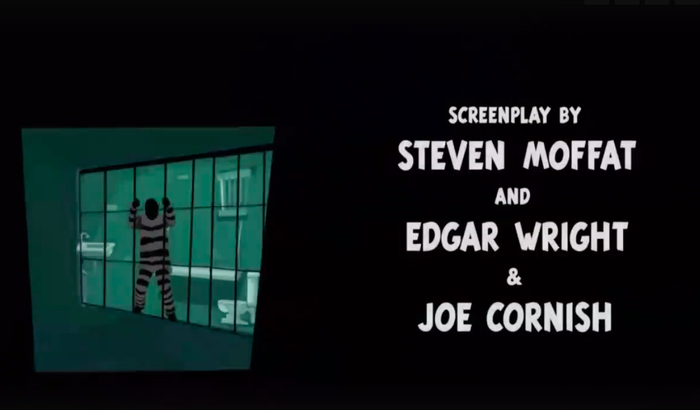
Сценарий сначала вел Стивен Моффат (тот самый автор «Доктора Кто» и «Шерлока»), но из-за занятости он передал черновик Эдгару Райту. Райт вместе с Джо Корнишом довели сценарий до готовности, поэтому в титрах мы видим «written by Steven Moffat and Edgar Wright & Joe Cornish».
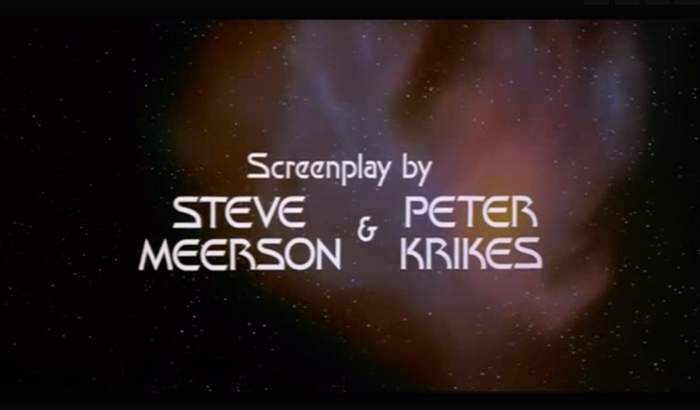
Схожая история у «Star Trek IV: The Voyage Home», где значится «written by Steve Meerson & Peter Krikes and Harve Bennett & Nicholas Meyer» — и эта подпись растянулась на три карточки.
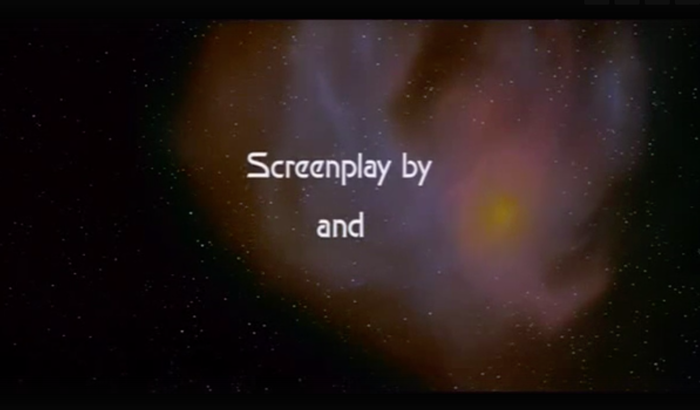
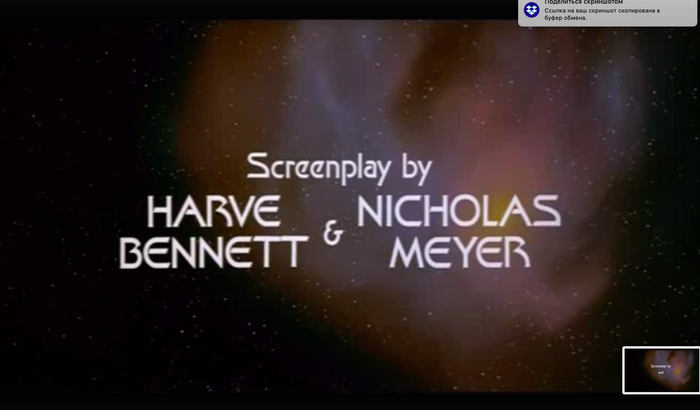
Такой финт потребовался, потому что в ранней версии сценария (Мирсона и Крайкса) важную роль должен был сыграть Эдди Мерфи. Фанаты франшизы встретили эту идею в штыки, и буквально за 12 дней новая пара сценаристов — Харв Беннет и Николас Мейер — переписали текст, убрав героя под Мерфи.
P.S. Есть и другие подписи, которые Гильдия сценаристов регулирует не менее строго:
- Story by — автор(ы) идеи или те, кто разработал сюжет, но внес менее 33% итогового сценария.
- Screenplay by — сценаристы, которые написали финальный набор сцен и диалогов.
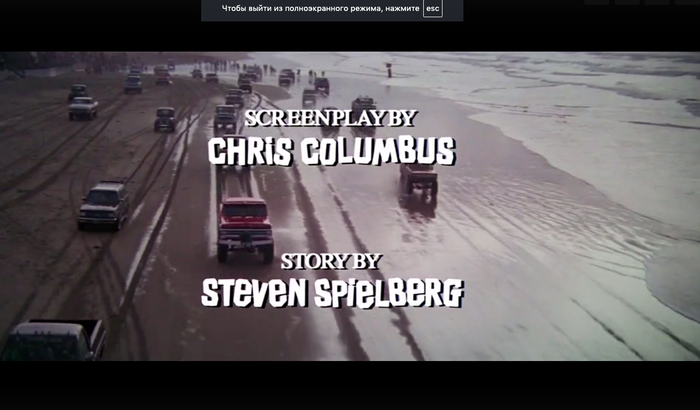
Пример — «Балбесы» (1985): Стивен Спилберг придумал концепт и продюсировал фильм, а Крис Коламбус превратил его в полноценный сценарий.
- Written by — объединяет статусы Story by и Screenplay by, когда одна и та же команда отвечает и за идею, и за сценарий.
Все эти формулировки напрямую влияют на гонорары, поэтому за точность Гильдия следит очень тщательно.
Meanwhile “Back to the Future” presents the duo “Robert Zemeckis & Bob Gale”.
What is the difference between “and” and “&”? The Writers Guild of America explains that “and” means the writers worked separately, while an ampersand signals a unified writing team.[source]
“The word ‘and’ designates that the writers wrote separately and an ampersand (‘&’) denotes a writing team.”
In practice, the ampersand appears only when the writers collaborate simultaneously and share equal responsibility. The word “and” indicates that one writer revised another’s draft — in that case the second name usually reflects the more substantial contribution.
A neat case study is Steven Spielberg’s “The Adventures of Tintin”.
Steven Moffat — yes, the “Doctor Who” and “Sherlock” showrunner — was first on the screenplay, but eventually handed his draft to Edgar Wright. Wright teamed up with Joe Cornish to finish the script, so the final credits read “written by Steven Moffat and Edgar Wright & Joe Cornish”.
“Star Trek IV: The Voyage Home” goes even further with “written by Steve Meerson & Peter Krikes and Harve Bennett & Nicholas Meyer”, spread across three title cards.
That elaborate wording happened because Meerson and Krikes’s early draft revolved around a comedic character meant for Eddie Murphy. Fans hated the idea and even threatened a boycott, so within twelve days Harve Bennett and Nicholas Meyer rewrote the script, removing Murphy’s role entirely.
P.S. The Guild also regulates other labels just as strictly:
- Story by — credited to those who originated the concept or helped shape the plot while contributing less than 33% of the final screenplay.
- Screenplay by — the writers who delivered the finished scenes and dialogue.
A textbook example is “The Goonies” (1985): Steven Spielberg dreamed up the premise and produced the film, while Chris Columbus turned it into a full script.
- Written by — combines both Story by and Screenplay by, meaning the same team handled the idea and the script itself.
Because these labels determine how writers are paid, the Guild keeps a close eye on the wording.